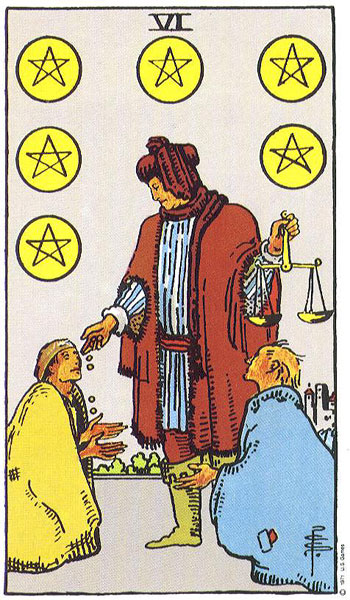
Six of Pentacles Tarot Card Meaning
The Six of Pentacles is a card of generosity and fair exchange within the Minor Arcana's Pentacles suit. It shows a figure distributing coins or gifts, symbolizing the natural flow of abundance between giver and receiver. This card reminds us that wealth—material or otherwise—is meant to circulate, and that balance in giving and receiving creates harmony.
Upright Meaning
What goes around comes around. Pay it forward if you're doing well, or accept help gracefully if someone is offering you a hand.
Reversed Meaning
When the Six of Pentacles appears reversed, the flow of generosity stalls. You may be giving too much at the expense of your own wellbeing, or conversely, refusing help when you genuinely need it. Pride, resentment, or an imbalance in relationships can block the natural exchange of support.
Reversed, this card can also signal selfishness or strings attached to gifts. Someone may be offering help with hidden expectations, or you might be struggling to receive without feeling indebted. The message is to examine where reciprocity has broken down and restore fairness to your relationships.
Love & Relationships
In love readings, the Six of Pentacles tarot love meaning centers on mutual care and emotional investment. Both partners are giving and receiving equally, creating trust and security. If you're single, this card suggests you're ready to share your heart openly and attract someone who values reciprocity.
When reversed in matters of the heart, beware of one-sided dynamics. You or your partner may feel drained by constantly giving without receiving. This is a call to rebalance—communicate your needs and ensure both people feel valued.
Career & Money
For career and finances, the Six of Pentacles tarot career meaning points to fair dealings, bonuses, or collaborative success. You may receive recognition, a raise, or help from a mentor. This card also favors networking and generosity—sharing your skills or knowledge builds professional reputation and opens doors.
Reversed, it warns against unfair contracts, unpaid labor, or taking credit for others' work. Financial imbalances may become obvious. It's time to negotiate firmly for what you deserve or to stop accepting less than fair compensation.
Spirituality
Spiritually, the Six of Pentacles invites you to see abundance as a cycle rather than a hoard. True wealth flows when you release it with trust and receive with gratitude. This card teaches that generosity is not depletion—it strengthens your connection to universal abundance and to others. Practice giving without expectation and receiving without shame.
Yes or No
The Six of Pentacles is a yes or no card only when the outcome involves fair exchange or mutual benefit; if the question involves one-sided gain or imbalance, the answer leans no.
Frequently Asked Questions
What does the Six of Pentacles mean in a yes or no reading?
The Six of Pentacles is a conditional yes or no card. If your question involves fairness, mutual benefit, or a balanced exchange, the answer leans yes. If it's about one-sided gain or taking without giving back, the answer is no. Context matters here.
Is the Six of Pentacles reversed always bad?
Not necessarily. Reversed, it signals an imbalance that needs correcting—either you're giving too much, receiving too little, or both. It's a wake-up call to restore fairness and set healthy boundaries, which can lead to positive change.
What's the difference between the Six of Pentacles upright and reversed in love?
Upright, the Six of Pentacles tarot love meaning shows a healthy, reciprocal relationship where both partners feel valued and supported. Reversed, it indicates one person is overgiving or underreceiving, creating resentment or emotional depletion. The relationship needs rebalancing.
Does the Six of Pentacles mean I'll receive money?
The Six of Pentacles tarot career meaning can suggest financial gain, especially through fair dealings, bonuses, or help from others. However, it's more about balanced exchange than guaranteed money. Reversed, it warns against unfair financial situations and the need to negotiate better terms.